

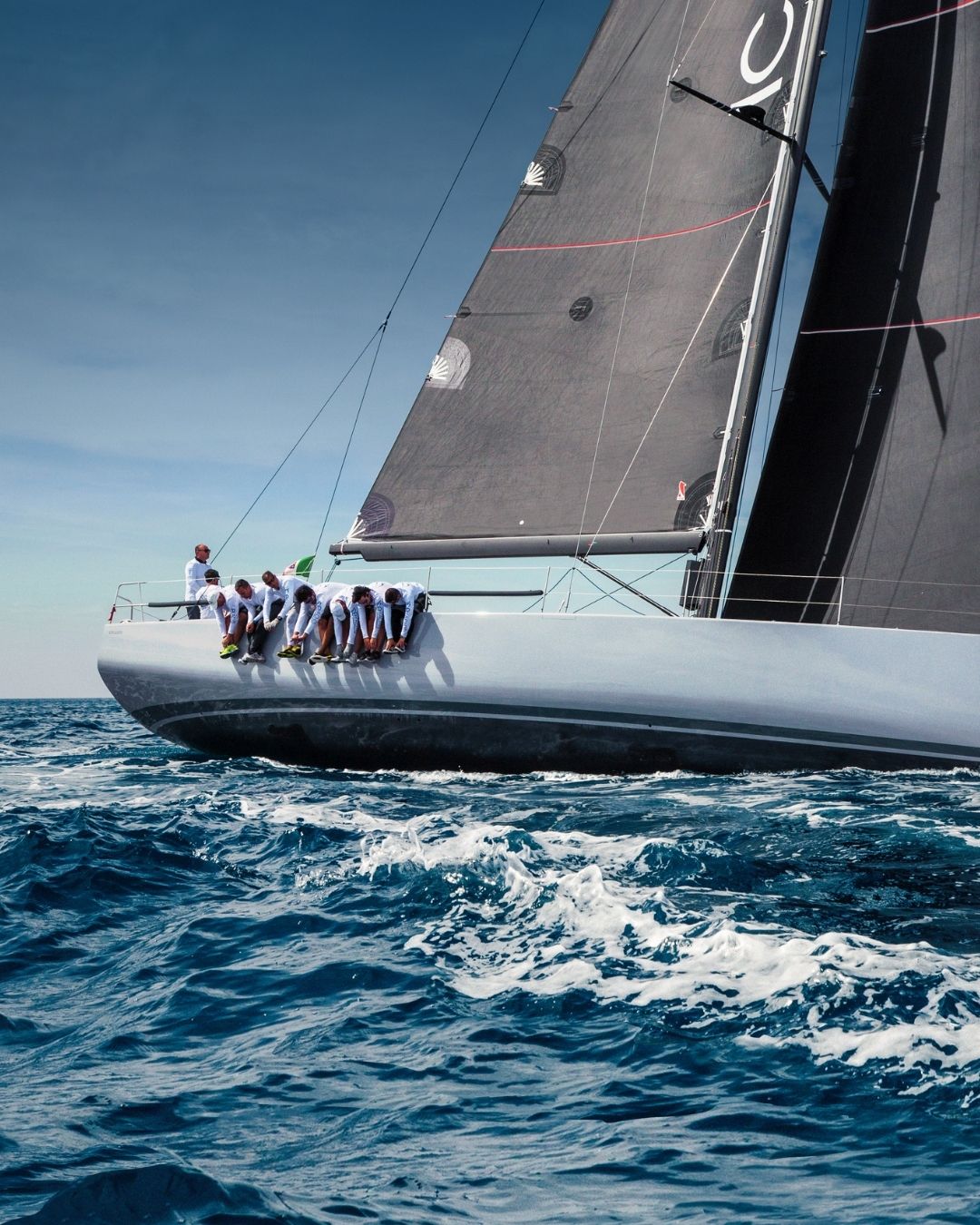
How to trim your mainsail for performance sailing—from cruising to offshore racing
Mainsail trimming is where performance is either created or lost. We approach sail trim as a system of aerodynamic efficiency, where sail design, materials, and trimming technique work together. Whether you are cruising or racing offshore, understanding how to control your mainsail means unlocking measurable gains in speed, balance, and safety. Let’s cover it from the beginning..
What Is Mainsail Trimming? (And Why It Matters)
Mainsail trimming is the process of adjusting the sail to optimize two key variables:
- Angle of attack – how the sail meets the wind
- Sail shape – depth, twist, and profile distribution
When these elements are correctly balanced, the drag is minimized, the airflow remains attached and efficient and the boat sails faster with less effort. Poor trim, on the other hand, increases heel, weather helm, and energy loss.
The Fundamentals of Sail Shape: Depth, Draft, and Twist
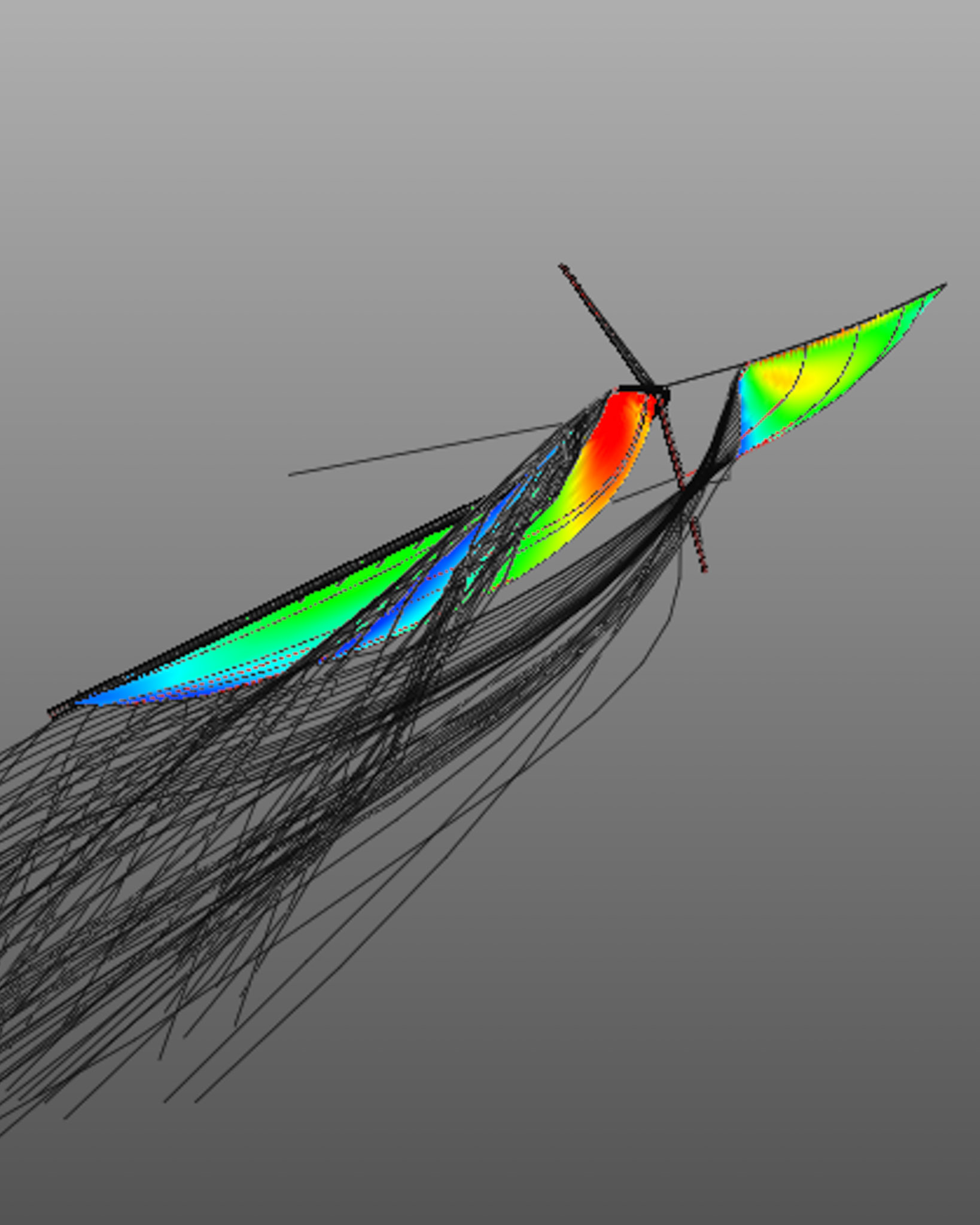
Modern sail performance depends on precise control of shape.
Depth (Power)
- Fuller sail → more power (light wind)
- Flatter sail → less drag (strong wind)
Draft Position
- Forward draft → stable, forgiving
- Aft draft → more power, less control
Twist (Critical for Efficiency)
Twist allows the sail to adapt to changing wind angles from bottom to top.
- More twist → improved airflow, acceleration
- Less twist → higher pointing, more load
At OneSails, sail geometries are designed to maintain optimal shape stability across a wide wind range, reducing the need for extreme trimming corrections.
Mainsheet: The Primary Performance Lever
The mainsheet is your most active control, directly influences: sail angle, leech tension and twist.
Instead of simply trimming ‘in or out,’ focus on how much load you are applying and how clean the airflow is across the sail:
- Trim harder → reduce twist, increase pointing
- Ease slightly → restore flow, improve acceleration
Best practice: Build speed first, then progressively trim for height.
This sequence is fundamental in both cruising efficiency and competitive sailing.
Traveller: Power Without Compromising Shape
The traveller is a precision control often underutilized.
- Traveller up → maximum power and upwind angle
- Traveller down → depower while maintaining optimal twist
Unlike the mainsheet, the traveller allows you to manage heel and balance without collapsing sail shape.
This becomes critical in:
- Gust response
- Offshore stability
- Maintaining consistent rudder load
Outhaul: Controlling the Lower Third
The outhaul defines the power distribution in the lower sail.
- Tight → flatter, more control
- Loose → deeper, more power
In performance sailing, early flattening reduces drag, excessive heel and rudder correction.
With advanced membrane sails like those from OneSails, outhaul adjustments translate into precise and predictable shape changes, not distortions.
Backstay: Structural Control Meets Aerodynamics
Backstay tension influences both: Mainsail shape (via mast bend) and Headsail performance (via forestay tension)
- Light air → minimal tension for maximum power
- Heavy air → increased tension to flatten and depower
This dual effect makes the backstay one of the most strategic controls onboard.
At OneSails we design sails to match specific mast bend characteristics, ensuring trimming inputs deliver consistent aerodynamic outcomes.
Reading the Sail: Tell-Tales and Feedback
The sail always tells you what it needs.
Always focus on: Leech tell-tales, Flow consistency and Helm pressure.
Guidelines
- Light wind → continuous flow at the top
- Medium wind → intermittent stall (controlled)
- Strong wind → open leech to maintain flow
If airflow breaks down, performance drops immediately. Make sure to react early.
Boat Balance: The Hidden Performance Multiplier
Speed is not just about power, but also balance.
A correct mainsail trim delivers a stable heel angle, reduced weather helm and efficient keel and rudder engagement.
While imbalance leads to drag increase, autopilot strain (offshore) and crew fatigue.
A well-trimmed mainsail works in harmony with the headsail to create a coherent aerodynamic system, not two independent forces.
Adapting to Conditions: Dynamic Trimming
There is no “perfect trim”—only constant optimization.
High-performance sailing requires continuous micro-adjustments, awareness of wind shifts and pressure and, transition between power and depower modes. The most effective sailors are not reactive—they are anticipatory.
OneSails Perspective: Integrating Sail Design and Trim Dynamics
At OneSails, trimming efficiency starts long before you leave the dock.
Our sail technologies are engineered to maintain shape integrity under load, reduce distortion over time and respond precisely to trimming inputs.
This means:
- Less guesswork
- More repeatable performance
- Greater control in demanding conditions
The best trim is only possible when the sail itself is designed to respond correctly.
Looking to improve your sail performance?
Discover how our advanced sail technologies can elevate your trimming precision and on-water results.
👉 Explore our range of performance sails
👉 Contact our experts for tailored sail solutions
👉 Want to know more? Find here our complete full Mainsail Trimming Guide