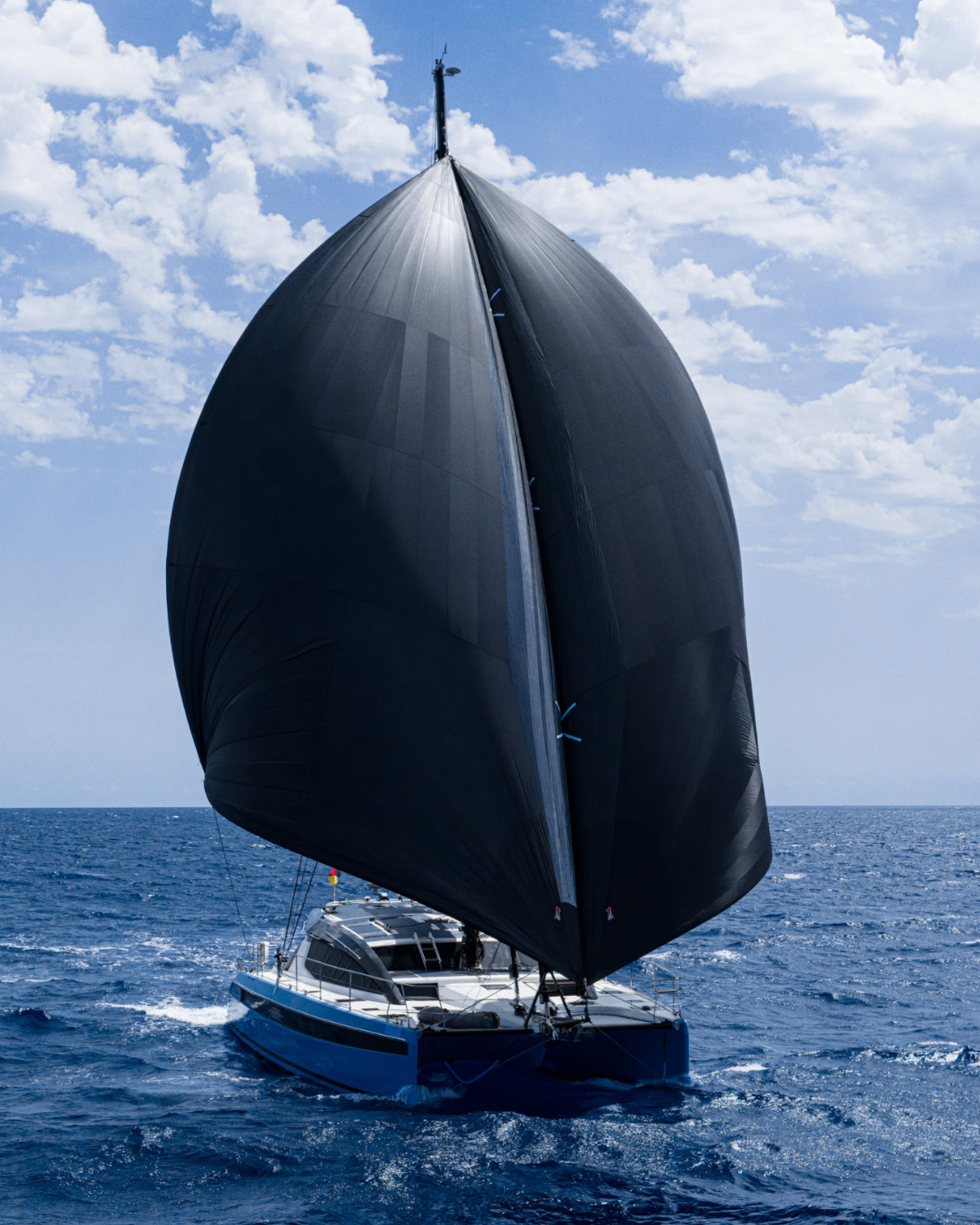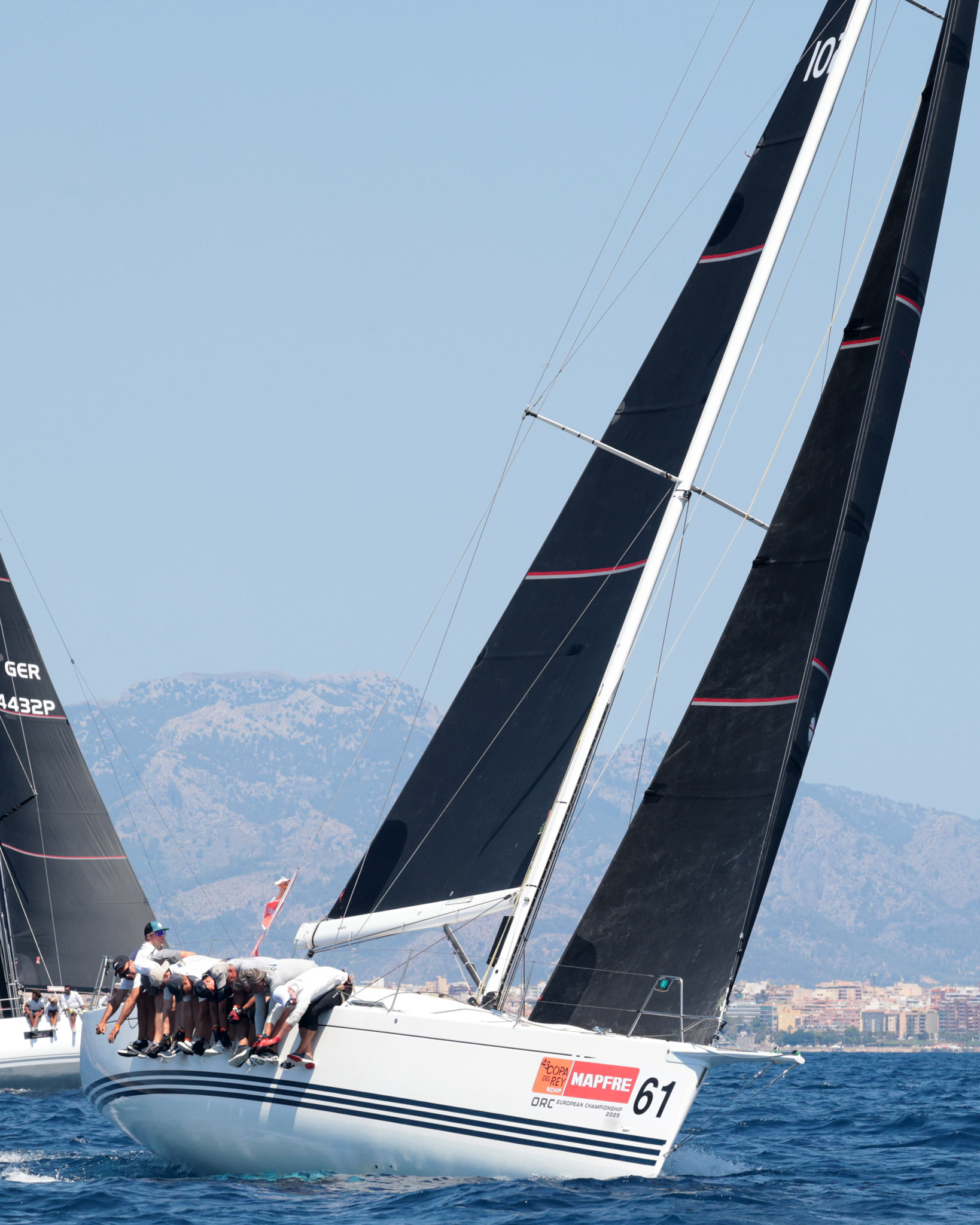


This sail buying guide covers what actually matters when you’re ordering a new sail. Modern sailmaking gives you more choice than ever — in cut, material, and construction. That’s a good thing, but it also means a few fundamentals get overlooked. Here’s what actually matters when you’re ordering a new sail — and how to decide.
The details make the difference
Buying a sail is, in a sense, a leap of faith — you’re ordering a custom-made product for your yacht before it exists. That’s exactly why the details need to be nailed down early. Battens, reef points, sliders, luff protection, and all the other functional components should be agreed at the consultation stage. Change your mind later and it’s slow, or simply not possible. The same goes for the look of the sail — trim stripes, sail number, insignia. A good, experienced sailmaker will guide you through all of it.
Before your consultation, know your answers to these: How many miles do you sail per season, and where? Do you cruise shorthanded or with crew? Do you race, even casually? What reefing and furling systems are on the boat? Bring these answers and the consultation gets specific fast.
Beyond the sailcloth itself, mast bend and the reefing and hoisting systems you use all shape a sail’s design. That’s why the starting point is always a proper requirements analysis — matching the sail to how you actually use the boat, where you sail, and what yacht you’re sailing. Measurements alone don’t get you there. That’s why we listen closely before we design anything.
From vision to visualisation
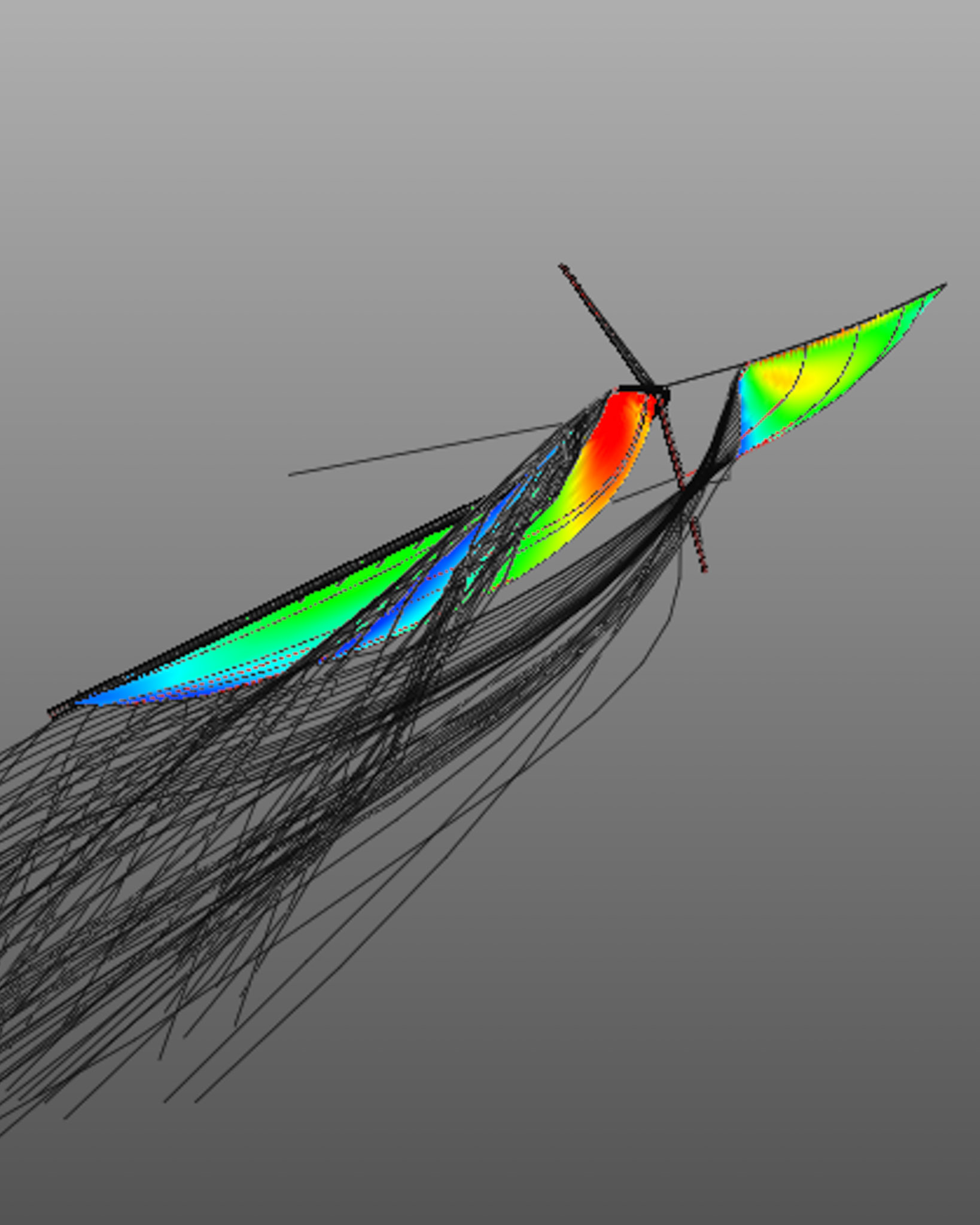
Once your requirements are set, your sail takes shape in our design software, SailPack. From there you get a rendering of the finished sail with rig and deck — a realistic preview before a single panel is cut.
Measuring aboard
Measuring on board, with the mast standing, gives the highest accuracy — particularly for headsails. It’s worth the extra step.
When do you actually need a new sail?
Run this quick self-test on your next sail:
- The boat won’t point as high as it used to → the profile has aged.
- She struggles to build speed in conditions where she used to accelerate → same story.
- She rounds up excessively in gusts and won’t hold a course → the sail’s profile has deepened too much with age and is generating more sideways force than drive. That’s your definitive cue.
If two or more of these apply, the sail is costing you performance every time you leave the harbour — start the conversation now.
Getting the material right
The choice of woven cloth or laminate, and the fibre it’s built from, determines a sail’s structure, profile, and lifespan.
The short version:
- Choose woven polyester if you sail moderate mileage, want a robust, forgiving sail, and value price over ultimate shape-holding.
- Choose a hybrid weave (e.g. HydraNet) if you want a flatter, more stable profile than woven cloth delivers, but aren’t ready for laminate or membrane prices.
- Choose a traditional laminate if you sail serious mileage, sail a yacht of around 40 feet or more, and shape retention over years matters more to you than initial cost.
- Choose a membrane (4T FORTE or Vantage One) if you want laminate-level (or better) shape-holding without the delamination risk — membranes are built without glue or Mylar film in the first place, so there’s no adhesive bond that can fail later.
Now the detail behind those rules.
Woven cloth: still the industry workhorse
Woven sailcloth is made from long warp and short weft threads, woven at a 90° angle. That structure makes it robust, forgiving, and cost-effective — which is exactly why it remains so popular. Weave pattern and finishing matter here: a tightly woven cloth with a well-calibrated finish holds its shape and resists the diagonal stretch that shortens a sail’s useful life.
Radial vs. cross-cut: which cut is right?
Cross-cut and radial-cut sails are often confused, but the logic behind each is different. Cross-cut construction is simpler and more cost-effective; radial cut arranges the panels along the sail’s load lines, giving the sail more shape-holding potential over time.
Decision rules:
- Budget-led, moderate mileage, smaller sail area → cross-cut.
- Higher loads, bigger boat, more miles, or you keep sails for many seasons → radial.
- Ordering radial? Use a fabric built for it: Pro Radial is purpose-engineered to resist distortion along load lines (typically used for working sails rather than spinnakers/gennakers). Radial cut with standard cross-cut cloth wastes the cut’s advantage.
We use our own design software to lay out panels for both cuts, factoring in crew, boat, sail area, and sailing region — because cut and design affect handling as much as they affect shape.
Hybrid synthetic fabrics
Hybrid fabrics weave polyester with high-modulus fibres like Dyneema or Vectran. The high-modulus fibres are pre-shrunk mechanically before weaving, so shrinkage doesn’t happen unpredictably once the sail is in use — giving hybrid weaves fast, reliable shape retention. Choose our HydraNet hybrid radial fabric when you want a flat, stable shape without moving all the way to laminate — the classic middle path for ambitious cruisers.
Laminates: built for the serious cruiser
Laminates bond fibres and film using an adhesive, under heat, with the load-bearing fibres running unidirectionally along the leech. That structure gives laminates a key advantage over woven cloth: minimal stretch, even after years of use.
A typical cruising laminate build, from outside in:
- Taffeta
- Mylar film, 2-ply
- Fibre layer
- X-Ply film for extra load-carrying capacity
One caution: over time, adhesives inside the laminate can lose bonding strength, particularly where UV exposure and heat combine — most often at the leech. This can cause the layers to separate.
Practical takeaways: don’t economise on the taffeta/film pairing, cover or remove laminate sails when not in use, and inspect the leech each season for early signs of delamination.
Which laminate?
- Cross-cut → DCX, using polyethylene or polyester fibres, the best balance of mileage and value.
- Want the shape-holding of a laminate without the adhesive? See membranes, below.
Membranes: our own technology
A membrane is not the same thing as a traditional laminate, even though the two get lumped together. Where a laminate bonds fibre and film with glue under heat — the exact bond that eventually fails at the leech — a membrane fuses fibre and film into a single skin with no glue and no Mylar layer at all. That removes the delamination risk described above at the source, while also cutting weight. We build two membrane ranges, at two different price points:
4T FORTE — our flagship, patented continuous-fibre membrane, refined over fifteen years of grand prix and offshore racing. Load-bearing fibres are fused directly into a cross-linked polymer matrix and encapsulated in UV- and mildew-resistant ripstop shields — no glue, no Mylar. It’s lighter than a conventional laminate and holds its shape for the sail’s full working life. Choose 4T FORTE when performance and longevity matter more than price — racers and serious offshore cruisers.
Vantage One — a more affordable membrane, built on automated flatbed lamination using thermoplastic film rather than 4T FORTE’s continuous-fibre process, but still filmless and glueless at its core. Fibre options include Twaron (Kevlar), Dyneema, carbon, or polyester, so it scales to budget and use case. Typically 25–40% cheaper than 4T FORTE, with an expected life of 8–10 years. Choose Vantage One when you want membrane-level shape-holding without the 4T FORTE price tag.
Decision rule: Radial cut, yacht of 40 feet and up, chasing maximum profile stability and lifespan → DYS Offshore, built on 4T FORTE and Vantage One filament technology (roughly 750 nautical miles of life). If your priority is pure performance and you’re prepared to pay for it, ask for 4T FORTE specifically; if you want the same underlying technology at a lower cost, ask for Vantage One.
Fibre by fibre
Every fibre trades off strength, UV resistance, flex-fatigue resistance, and cost differently. Match the fibre to the job:
- Polyester — affordable, easy to process, forgiving. Default choice for radial-cut cruising sails. Pick it unless you have a specific reason not to.
- Nylon — low breaking strength but very stretchy — which is exactly the point. Only for spinnakers, gennakers, and code sails.
- Pentex — roughly 20% higher breaking strength than standard polyester, without the drawbacks of high-modulus fibres. Pick it when you want a step up from polyester at modest extra cost.
- Aramid (Kevlar, Twaron) — high breaking strength, low stretch, moderate cost. Pick it when you want real structure without paying for carbon.
- Carbon — the highest profile stability available, but brittle with comparatively low breaking strength. Only worthwhile paired with a robust membrane construction like 4T FORTE or Vantage One — typically racers.
- Vectran / LCP — high strength, minimal stretch, but expensive. Rarely used alone; you’ll usually meet it blended with polyester in hybrid weaves.
- HMPE (Dyneema) — low stretch, high UV and flex resistance. Pick it when you’re a performance cruiser or racer-cruiser — it’s what we use in HydraNet and our Ultra High Modulus laminates.
Rule of thumb: the higher a fibre’s modulus, the lower its stretch — but that performance costs money and brittleness. Match fibre to actual use rather than chasing the «best» fibre on paper; that’s where the real value is.
Reef sails: don’t overlook them
A reef mainsail or reef genoa needs to be just as well thought through as your primary sail — arguably more so, since it has to work across a wide range of conditions.
Reef genoa
Your reef genoa should have a flatter profile than your working headsail, since it’s called on when the wind — and the load — is up. Spec it with full luff protection along the leading edge (the sail spends time exposed at the headstay) and UV-resistant sacrificial cloth in a colour matching your primary sail — we sew this on as standard. If you regularly see genuinely heavy air, add a Genoa 3 — cut flatter and smaller for exactly those days.
Reef mainsail
Roller-boom mainsails need to reef and stow just as comfortably as they set. We build in a reliable in-boom furling system, using a membrane construction with laminated, non-stretch battens. Decision rule: up to about 30 sqm, cross-cut is entirely sufficient; above that, go radial.
Light-air and storm cover
Two gaps most sail wardrobes leave open:
- Light air: our Flat Furling Reacher (FFR) works from roughly 45° to 120° true wind angle. If you regularly motor in under 10 knots of breeze, this is the sail you’re missing.
- Heavy air: our purpose-built storm jib handles wind over 40 knots with a flat, controlled shape. Don’t improvise with a reefed working sail — it’s the wrong profile at exactly the wrong moment.
Nylon sails
For maximum light-air performance, we also offer a nylon sail cut specifically for the wind range where your working sails start to sag. Nylon’s stretch is an asset here — it fills more easily in light air and holds shape better through puffs than a genoa cut from stiffer cloth.
There’s no single «best» sail material or cut — only the right one for your boat, your sailing region, and how you actually use her. If you take one thing from this guide: come to the consultation knowing your miles, your crew, your waters, and your systems — the rest we’ll work out together.
Get in touch with your nearest OneSails loft — we’ll talk it through and build the right solution for your sailing.